Commercial kitchen pest sanitation defense directly addresses the high-moisture, grease-rich microclimates common to older brick-and-timber retail spaces along Marietta Street, Krog Street in Inman Park, and Howell…
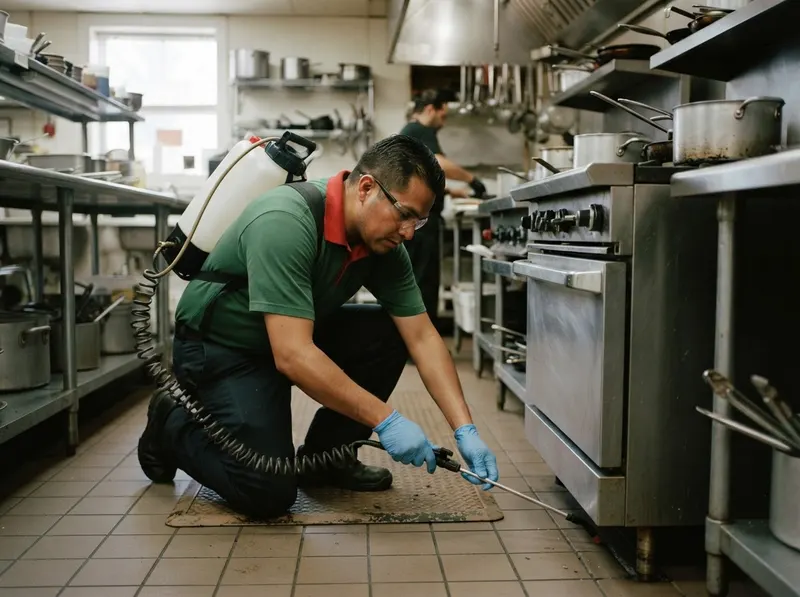
Commercial kitchen pest sanitation defense directly addresses the high-moisture, grease-rich microclimates common to older brick-and-timber retail spaces along Marietta Street, Krog Street in Inman Park, and Howell Mill Road. German cockroaches (Blattella germanica) thrive inside the rubber door gaskets of low-boy refrigeration units and behind stainless steel splashbacks where wash water mixes with food solids. Standard surface spraying pushes these insects deeper into wall voids; clinical defense instead deploys specialized insect growth regulators (IGRs) alongside micro-encapsulated baits that disrupt the chitin synthesis of nymph populations. Operators facing municipal board of health audits require clear documentation of mechanical vector elimination rather than cosmetic aerosol treatments.
Drain ecosystems in humid Atlanta summers harbor heavy loads of psychodid drain flies and phorid flies beneath wet line lines and grease interceptor collars. Bio-enzymatic evacuation breaks down the thick organic slime layer that lines the first 6 feet of cast-iron or PVC pipework, eliminating the primary oviposition substrate where fly eggs incubate. For facilities operating inside historic buildings in Old Fourth Ward, Midtown, or Grant Park, subfloor settlement creates access gaps around utility penetrations. Sealing these floor-to-wall junctions with stainless steel mesh and silicone barrier sealant physically denies entry to commensal rodents tracking in from urban alleyways.
Selecting a single corrective remediation protocol provides clear financial relief over the rigid, locked-in monthly subscriptions pushed by national chain conglomerates. If a kitchen contends with an active, isolated infestation following seasonal humidity spikes, a single intensive decontamination with a targeted 30-day follow-up provides total eradication without auto-renewing overhead. If a larger high-volume commissary facility runs multi-shift fryers, ongoing bi-monthly structural exclusion proves necessary to withstand continuous pallet deliveries. The trade-off centers on internal cleaning labor: bio-enzymatic treatments require daily line staff adherence to floor dry-down protocols to maintain the protective perimeter barrier.
Every job gets a firm, written price after a free on-site visit.
Tell us about your commercial kitchen pest sanitation defense job in Atlanta and we'll send a clear, written quote, usually the same day.
 Peachtree Falcon Pest Control